Tips for your first Sublustrum session
Headphones, notes, slow exploration, and why you should treat the first apartment like a crime scene, not a dungeon.
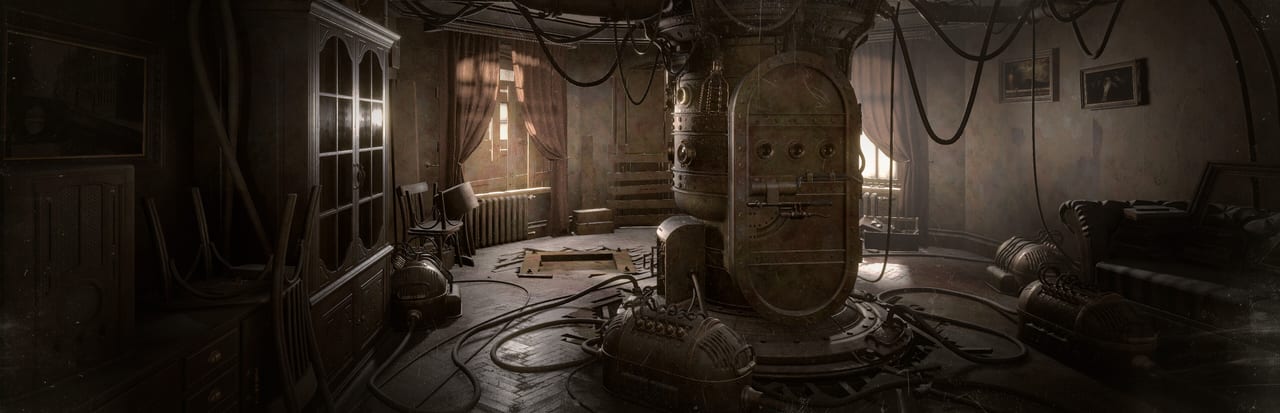
Sublustrum rewards patience over reflexes. The chapter-one playtest that opened on 4 September 2026 is built around a brother’s apartment, a machine, and the beginning of a Flickering World — not a combat tutorial. These tips come from the game’s own design logic and from what veterans of the 2008 original wish they had known before their first session.
Pair this page with Getting Started for setup steps, and with How to Play for the core verbs. Spoiler-sensitive plot notes live on Story. A full historical walkthrough for the 2008 game is on Original Walkthrough.
Wear headphones before you launch
Sound is not atmospheric wallpaper in Sublustrum. It is a puzzle input. The studio began the project as an interactive album from Anthesteria (Georgy Beloglazov’s dark-ambient project), and the remake still describes audio as something you play, not only something you hear.
A detuned piano, a bar that shifts from noise to tone, a harp string that is almost correct — those are cues that flatten on laptop speakers. You do not need audiophile gear. Any stereo headset is enough. Plug in, raise volume until you can clearly distinguish hiss from tone, and leave notifications off. This is the closest thing the genre has to a difficulty setting.
Read every document fully, twice
Diaries, newspaper clippings, botanical notes, recorded cylinders, and letters are not flavour text. The 2008 original hid scissors, combination codes, and plant-extract ratios inside pages that players had already “found.” The remake expands text and connective tissue, which means more sentences that later become frequency hints or machine states.
When you pick up a document, read it in inventory, not just the pickup toast. When you finish a document, leave it open for thirty seconds before you move on. If a machine is not responding, the answer is usually in a page you skimmed.
Walk slowly through the first apartment
The 2008 game used fixed camera nodes. The 2026 remake gives you free movement. That means objects that used to sit in the centre of a composed shot can now hide behind furniture, under a table, or on a wall you never turned to face.
The brother’s apartment is also a laboratory. Victorian furniture shares space with industrial experiments. When something looks like it belongs in a workshop more than a sitting room, it is probably part of the brother’s work. Do not sprint past it.
Stop at thresholds. Look up. Look behind you after you throw a switch. A door you opened two rooms ago may now be in a different place because the space has shifted.
Change one slider at a time
Sound puzzles punish people who wiggle everything at once. If a device has several controls — sliders, valves, keys — change one, wait through the decay of the sound, and assess before you touch the next. A room that goes almost quiet is telling you something. A bar that stops sounding like noise is confirming something. Patience is the tool.
If you are truly stuck, leave the room and come back after reading another document. Lateral thinking is the design. The answer is often a connection between a childhood memory, a drawing, and a noise — not a missing pixel on a hotspot.
Do not import 2008 solutions
The remake rebuilds locations as full 3D spaces and reworks familiar mechanics. The organophone code, the basement valve patterns, and the capsule sequence from the 2008 game are historical design, not 2026 walkthrough data. Bringing old solutions into the playtest will train you to look for the wrong answers in new rooms.
If you are a veteran who wants historical context, use the Original Walkthrough as a museum piece after your first playtest session. If you are new, treat the playtest as a clean first encounter.
Write down binds and settings
No final control overlay has been published. Before you touch the first interactive object, open settings, note invert-Y, sensitivity, and any rebind screen. If interact and inspect are separate keys, write them down. The first chapter is a test; your notes make the feedback useful.
If a pad is connected, test every menu before you assume full stick navigation works on day one of the playtest.
Expect psychological pressure, not combat threats
Sublustrum is tagged psychological adventure for a reason. The threat model is surreal architecture, unresolved grief, and the feeling that reality is thinner than it looks — not a health bar or an enemy count. You will not clear rooms of hostiles. You will explore, read, and operate machines.
If a scene feels oppressive, that is the intended response. If it feels quiet to the point of emptiness, that is also intentional. The game is not punishing you for slow progress. It is building atmosphere.
After your first session
Note what felt unclear: a control that was not bound, a sound you could not localise, a document that contradicted another page. The playtest exists so the team can hear that.
Then decide your next wiki stop. Movement and listening habits live in How to Play. If a machine felt like an instrument, go to Sound Puzzles. If you want the brother’s disappearance in clean language, go to Story. If you want to compare what you just played with the 2008 original, use Original vs Remake.
The Guides Hub is the full index. The finished Fall 2026 game is still upcoming. What you played in September 2026 is chapter one of a story that is still being completed.
Frequently Asked Questions
Quick answers to the most common questions.
Do I need headphones for the playtest?
Yes. Sound is a puzzle input, not ambient decoration. Any stereo headset is sufficient; the difference between laptop speakers and headphones is significant for sound puzzles.
Should I take notes during the playtest?
Yes. Write down codes, combinations, document excerpts, and anything that felt unclear. The original hid critical information inside pages players had already skimmed.
Can I use my 2008 walkthrough for the 2026 playtest?
No. Puzzles are reworked and locations are rebuilt as free 3D. Treat the playtest as a clean first encounter and the 2008 route as historical context for after your session.
Is there combat in the first chapter?
No. The playtest covers the apartment and the opening of the Flickering World. Expect exploration, documents, and machines — not combat encounters.
How do I give useful feedback after the playtest?
Describe what you heard and what you saw, not only what you clicked. Report unbound or double-bound keys, sounds you could not identify, and documents that felt unclear.
How long is the playtest chapter?
The playtest covers the first chapter only. The Fall 2026 full game will be longer. There is no announced runtime for the test slice.