Sublustrum Original vs Remake
2008 point-and-click Outcry versus the fully explorable 2026 3D remake — what actually changes.
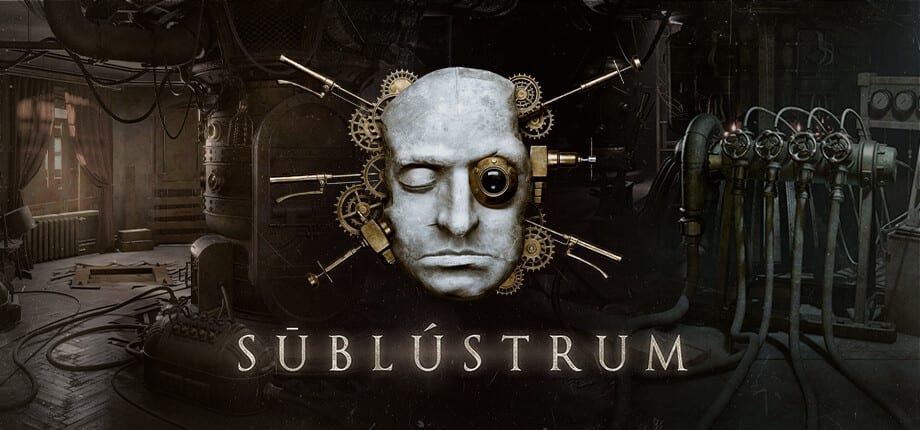
The 2026 Sublustrum is not a scene-by-scene remaster of 2008’s Sublustrum, known in the West as Outcry and in Europe as Outcry: The Dawn. Georgy Beloglazov, the original creative director, has been blunt about the gap: the new game should feel less like paging through old panoramas and more like walking the same city in person. Phantomery Interactive is rebuilding the project from scratch under the same studio name, with Brickworks Games publishing. The full remake is scheduled for Fall 2026 on PC via Steam and on consoles that have not been named yet. It is not out as a finished product. A Steam playtest covering the first chapter opened on 4 September 2026.
If you only remember a dusty CD, a 360-degree click, and a winter that refused to explain itself, this page is the map of what is being kept, what is being thrown out, and what is being invented for the first time. Use it beside the original walkthrough primer, the spoiler-heavy endings notes, the spoiler-light story page, how to play, and the review of what to expect.
Movement: nodes versus rooms you can actually walk
The 2008 game is a first-person point-and-click adventure. You stand on a node, pan a full circle, and left-click a hotspot or an arrow to hop to the next camera. Right-click opens inventory, the library of notes, and the menu. It is closer to Myst and Scratches than to a modern walker. That design made the apartment, the capsule, and the Shimmering World feel like a sequence of photographs with a swinging camera.
The remake translates those locations into fully explorable 3D. You move through rooms, look under tables, and choose your own line of sight instead of waiting for the next pre-authored frame. Beloglazov has said this is the most fundamental change: in 2025 and 2026 the team can finally give players freedom of movement, perspective, and spatial exploration that the original budget could not afford. Interfaces are redesigned around that freedom. If you are coming from the disc, expect to relearn how a room is searched. If you have never played the original, read how to play before you treat every surface as a clickable postcard.
Puzzles: redesigned, not copied
Do not bring a 2008 FAQ into the remake and expect the same clicks to work. Beloglazov has said almost everything is being reworked. All graphics are recreated from scratch. The majority of puzzles have been reworked or completely rethought so their logic accounts for a 3D environment and is more intuitive than the original’s occasional brick walls. The 2008 organophone bars that resolve as 2-5-7-5-4, the capsule wheel that repeats that sequence, the water-cooling taps, and the desert electricity board are historical solutions. They may change. They may disappear. They may survive as motifs rather than as identical machines.
Sound remains the trustworthy sense. The original asked you to listen for a tone that was not noise, to match harp strings, and to treat infrasound and an Albertia inhaler as part of the experiment. The remake still builds puzzles around audio, shifting gravity, and temporal distortion, but it adds new tasks and associative work that did not exist on the disc. That is why this wiki keeps a separate puzzles page for the remake instead of pasting Gameboomers into 2026.
Length: extra hours, even in chapter one
HowLongToBeat lists the 2008 original at about four hours for the main story, on a very small sample. Players who refused a walkthrough often spent longer, because several puzzles were unintuitive. Players who followed a guide could finish closer to two hours of raw footage. Igromania and other 2008 reviews also called the adventure short, especially in later chapters.
Beloglazov has explained why those later chapters shrank: a tight schedule and a microscopic budget. The remake significantly increases the content of each chapter, including the first. New locations, texts, puzzles, plot twists, and cutscenes are in. He has said that expansion will add several additional hours of play even before you count extra endings. The September 2026 playtest is only the first chapter, and it is already meant to feel larger than the 2008 opening apartment-and-capsule loop. Do not assume the finished Fall 2026 game is a four-hour copy with nicer lighting.
Story, branches, and endings
The spine is the same: a writer answers a scientist brother’s invitation, finds an empty apartment, repairs a machine built to immerse a human mind in the subconscious, and follows him into the Shimmering World — marketed for the remake as the Flickering World. Victorian melancholy, industrial forms, and early twentieth-century retrofuturism still set the temperature. Grief, the wish to change the past, and the work of letting go still sit under the plot.
What changes is connective tissue. The original left several story branches on the floor because the team ran out of time. The remake aims for a more connected narrative, new scenes, and extra endings. Beloglazov has said the openness of the ending will be preserved, and that the team added an important element that lets you understand the context more deeply without spelling out a single official reading. He has also said there will be at least one alternative ending. This wiki will not invent named remake ending titles before the finished game exists. Read the endings page for the 2008 winter scene and the honest limits of what is known about 2026.
Jungian language is more explicit in the new interviews: the Shadow, archetypes, and an inner journey toward the Self. That does not turn the remake into a textbook. It means the team now has the hours and the 3D space to stage ideas the 2008 disc could only hint at in diaries and a last walk across ice.
Audio: Anthesteria still leads
Sublustrum began as an interactive dark-ambient work as much as a puzzle game. Georgy Beloglazov’s project Anthesteria wrote the score; the 2008 game won Best Sound Design (and Best Adventure Game) at the KRI Awards. Western reviews that disliked the plot or the length still praised the music. The remake keeps that sound-first design. Motifs are meant to guide you through the world, not sit under a combat mix. Headphones are not a collector’s extra. They are how some machines talk.
Beloglazov has also talked about voices: he does not want the gloss of perfect studio acting in a dead recording booth. Expect performances that fit analog grain rather than a cinematic dub stage. If you are here for the album as much as the apartment, the soundtrack page is the next stop.
Visuals: vintage film, not a glossy remaster
The original’s look was photoreal for 2008, with a swinging camera and locations that could feel like staged photographs. The remake’s graphics are all new, but the target is not sterile 4K cleanliness. The team is styling the image after analog film and old lenses: grain, fragile edges, auteur-cinema light. Official materials describe a fractured dreamscape where reality dissolves and only sound stays trustworthy. Trailer shots of industrial interiors and liminal architecture are the pitch, not a promise that every 2008 node has a one-to-one 3D twin.
That distinction matters for buyers. If you want the exact organophone from the disc, rendered in Unreal and otherwise untouched, this is the wrong project. If you want the same subconscious machine rebuilt so you can walk around it, with new puzzles hanging off the same grief, you are in the right queue.
How to use both games in 2026
The remake is the current focus. The original is a cult PC adventure that has been hard to buy legally for years; a later Steam outing for the 2008 build has been discussed as a separate, later plan, not as a substitute for the Fall 2026 game. Playing the disc first is optional. It will help you recognize motifs — capsule, desert, harp, winter — but it will not hand you the remake’s answers.
A practical path: wishlist the remake, request playtest access, learn movement on how to play, skim this comparison, then use the original walkthrough primer only as a structural memory. Save the endings page until you have either finished the 2008 game or decided you are fine with winter spoilers. The story page stays lighter. The review page covers who the remake is for without inventing a score for an unreleased game.
The honest summary is small. Same brothers, same machine, same refusal to flatten the ending into a single moral. New body, new puzzles, more hours, extra endings, film grain instead of 2008 screenshots. Treat 2008 as a score and 2026 as a new performance of that score, not as a restoration print.
Frequently Asked Questions
Quick answers to the most common questions.
Is the 2026 Sublustrum a 1:1 remaster of Outcry?
No. All graphics are new, most puzzles are redesigned, movement is full 3D, and the story is expanded. It is a reimagining, not a scene-by-scene remaster.
Will my 2008 puzzle solutions still work?
Do not count on it. Beloglazov has said the majority of puzzles were reworked or rethought for 3D. The organophone sequence 2-5-7-5-4 is an original solution that may change. See the puzzles page.
Is the remake longer than the four-hour original?
That is the intent. Each chapter is being expanded, including the first, with extra hours of locations, text, puzzles, and cutscenes. The finished game is still scheduled for Fall 2026, so final length is not locked.
Does the remake keep the original's open ending?
Yes. The team has said the openness remains, and that extra endings and new context are being added. Details belong on the endings page, not in a numbered spoiler list.
Should I play the 2008 original before the remake?
Optional. It helps with atmosphere and structure, but it will not spoiler-proof the remake. The remake is the current focus; a later Steam plan for the original is separate.
Is the finished remake out yet?
No. Fall 2026 is the window. The first-chapter Steam playtest opened on 4 September 2026. Confirm dates on the store page, not on rumor threads.