Sublustrum Soundtrack
Anthesteria’s dark ambient and neoclassical writing is the remake’s spine, not a menu loop.
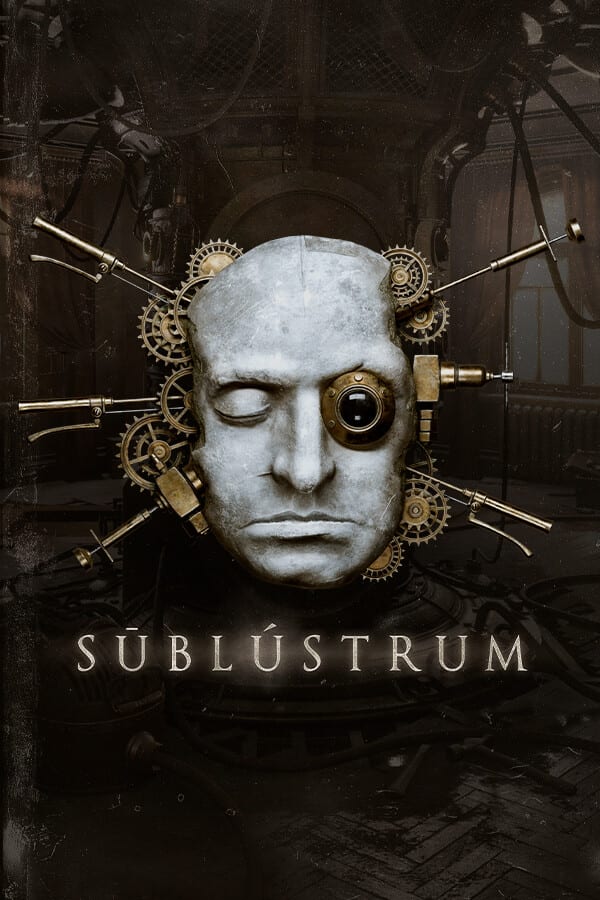
Sound as the first design document
Sublustrum did not start as a trailer looking for a composer. The 2008 game was conceived as an interactive companion to a music album. Georgy Beloglazov’s project Anthesteria — dark ambient blended with neoclassical writing — was the earliest influence, and the studio still describes music as the soul of the experience rather than wallpaper. The 2026 remake keeps that stance: every location is supposed to have a sonic identity, and several puzzles are shaped by what you hear, not by a glowing interaction prompt.
Beloglazov is also the Brickworks Games founder who returned to the Phantomery Interactive brand for this remake. He later contributed to the original Metro 2033 score — a useful listening reference if you know that game’s underground ambience and guitar fragments, not a claim that Sublustrum is a Metro spin-off. The register here is closer to apartment dust, detuned keys, and industrial dream space than to FPS combat stingers.
This page is a primer. It will not invent a 2026 OST store SKU, a vinyl date, or a streaming playlist the studio has not announced. The 2008 Sublustrum OST CD existed as a collector enclosure; that disc is history, not a preorder bonus for Fall 2026.
Location identities the studio has named
Official inspirations copy (12 December 2025) is unusually specific. A detuned piano lives in the professor’s apartment. Arabian rhythms mark a desert. Psychedelic guitar textures and hypnotic throat singing appear as other location colours. Those are identities, not spoiler maps. When the playtest or the full remake drops you into a room, listen for the bed that belongs there before you hunt every clickable drawer.
That approach is why this wiki keeps pairing the soundtrack with system requirements headphones advice. Steam’s spec sheet only asks for DirectX-compatible sound. A laptop speaker will flatten the piano into furniture noise. Stereo headphones are enough; you do not need a marketed “7.1 puzzle codec.”
The 2008 album track list (theme, journal, scientist’s apartment, vault, architectural abstraction, tunnel, dolmen, temple, tram, steamflower, lake, and others) is a mood index for the original. The remake rebuilds spaces in explorable 3D and rethinks many puzzles, so do not use a 2008 cue name as a spoiler-free walkthrough of 2026 rooms. For what actually changes between versions, use original versus remake.
How sound works in play
Studio language for the remake’s puzzles includes sound, shifting gravity, and temporal distortions. Sound is the one you can prepare for without a build: volume high enough to hear a detune, notifications off, and a willingness to stand still. If a machine hums in a pattern, that pattern is probably content. If a room goes almost silent, that absence is probably content too.
Voice direction for the remake has been described by Beloglazov as the opposite of glossy studio isolation — he has said he does not want sterile, perfectly acted voices floating in dead recording-studio space. Expect performances that sit in the world rather than in a cinematic volume lane. English and Russian are the announced full-audio languages; other languages on Steam are interface and subtitles. This wiki’s own languages are English, French, German, and Spanish and are unrelated to which voice track you pick in Steam.
Story-wise, you are a writer following a scientist brother’s machine into the Flickering World. The story page keeps that arc spoiler-light. Music will often tell you which layer of memory you have stepped into before a journal page does. That is deliberate. Do not skip the bed to “get to the puzzle.” The bed is frequently the puzzle.
Metro 2033, Anthesteria, and what not to import
Listeners who came through Metro 2033 will recognize Beloglazov’s taste for low drones and lonely melodic fragments. Import the mood, not the lore. Sublustrum is a psychological adventure about a machine, a missing brother, and liminal architecture — Victorian melancholy, industrial structures, early-twentieth-century retrofuturism — not a post-nuclear shooter. Treating every brass hit as a mutant tell will only confuse the playtest.
Anthesteria’s wider discography (albums such as Beyond Nimbostratus and Nebesnaya, work adjacent to Phantomery’s later Phobos 1953) is optional homework. You do not need it to request the chapter-one playtest. You need it only if you want to hear how long this composer has been writing the same weather.
What is unannounced
No official 2026 soundtrack store page. No confirmation that the 2008 CD will be remastered as DLC. No licensed film-score crossover despite the Lynch / Tarkovsky / Lang mood board. If Brickworks later sells an OST, it should appear on Steam and the official site, not as a random Google Drive dump. Until then, the trailer audio and the playtest client are the legal ways to hear the remake.
Use this primer next to puzzles when a room feels like it is waiting for you to listen, next to story when a theme change is doing narrative work, and next to original versus remake when you are trying to remember whether a 2008 cue still belongs to a 2026 space.
Frequently Asked Questions
Quick answers to the most common questions.
Who composes Sublustrum?
Georgy Beloglazov under the Anthesteria project, as with the 2008 game. He also contributed to the original *Metro 2033* score.
Is music just background?
No. Official copy treats location identities as design. Several puzzles are sound-shaped.
Can I buy the 2026 soundtrack?
Not as an announced store item. Do not pay for unofficial rips. Watch Steam and the official site if that changes.
Why do guides mention headphones?
Because a detuned piano in an apartment is easy to miss on laptop speakers. Headphones are not a Steam minimum; they are practical.
Does the remake reuse every 2008 track?
The studio has not published a cue-by-cue map. Spaces and puzzles are rebuilt. Compare versions on original versus remake.
Will music spoil the story?
Theme changes often mark a shift of memory layer. Keep story spoiler-light and let the bed tell you where you are.