The Sublustrum story, with a spoiler line
The premise is safe to read. The 2008 plot, identity theories, and winter ending sit below a clear warning.
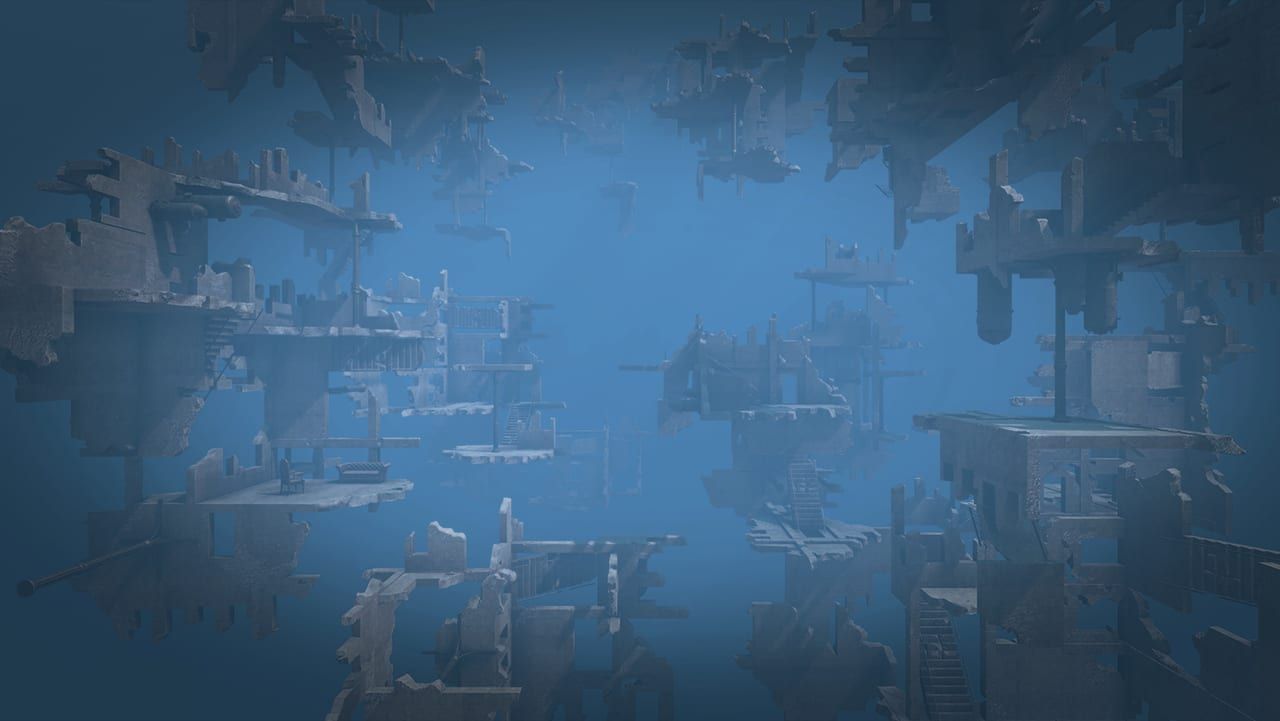
Sublustrum is a story about a writer, a missing scientist, and a machine that treats the subconscious as a place you can enter. The 2026 remake keeps that spine and then does more with it: extra hours, new scenes, extra endings, and connective tissue the 2008 team did not have time or budget to finish. The full game is still scheduled for Fall 2026. Nothing below is a recap of a shipped retail campaign, because that campaign is not in players’ hands yet. The playtest that started on 4 September 2026 covers the first chapter only.
This page splits in two. Everything above the spoiler heading is storefront-safe. Everything below it discusses the original 2008 plot in more detail, including readings people have argued about for years. If you want geography without identity theories, use Sublustrum Locations. If you want to know how the remake’s extra finales differ from the old open ending, wait for endings. How 2026 changes structure lives on original versus remake.
Spoiler-light: the premise you are allowed to know
You play a writer who arrives at his brother’s home. The brother is a scientist. He is gone. What remains is the last experiment: a strange machine built to immerse a human being in the depths of the subconscious. The store copy is accurate on the next beat. You repair the machine, you step inside, and you follow him into the Flickering World — a shifting, surreal realm built from memories, where reality thins at the edges and sound is the thing you can still trust.
The original game was set around 1916 in imperial Russia. Dust, gramophones, botanical experiments, and industrial prototypes share the apartment with furniture that belongs to a fading century. The remake keeps that melancholy and pushes it into photoreal 3D: Victorian ornament, factory structures, and early-twentieth-century retrofuturism in the same breath. Vintage lenses and aged film grain are not a filter slapped on for trailers. They are how the team wants memory to look.
Thematically, the studio points at Jungian psychology and Kafkaesque fiction. Official language describes the game as unfolding like a session of psychoanalysis: grief, the impossibility of changing the past, and the long work of letting someone go. You are not hunting a monster for a scoreboard. You are trying to understand what the brother was looking for, and why he did not come back.
Music is part of the narrative, not a layer on top of it. Georgy Beloglazov (Anthesteria, and a co-composer on Metro 2033) started the original as an interactive album idea. The remake still treats sound as a way the world tells the truth when images lie. That is why a location can be an instrument, and why a voice in static can matter more than a map marker.
The remake is not a compressed rerelease of a four-hour 2008 adventure with new textures. Chapters are being expanded. Plot branches that missed the original deadline are being written back in. Additional endings are confirmed. The openness of the finale is supposed to remain. You should finish the game — when it exists as a full product — expecting to argue about it, not expecting a single slide that grades your morality.
If you have not played yet, stop at the next heading. Go back to Getting Started or How to Play and let the apartment happen in order.
Spoilers for the 2008 original (and what the remake is building on)
The rest of this section discusses the original Sublustrum / Outcry plot. The remake will change scenes, add material, and offer extra endings. Do not treat 2008 events as a guaranteed 2026 script. For a room-by-room historical route, use the original walkthrough primer.
In the original, the writer does not find a living brother. He finds a house that has already been used as a laboratory. A recorded message and letters set the terms. The scientist warns against repeating the experiment, asks that notes be burned and devices destroyed, and then makes one exception: keep the capsule. That capsule, read as a diving bell, is the door. Around it sit an organophone that visitors mistake for a music teacher’s instrument, a greenhouse of plants used in the work, and a basement of valves that have to be brought into a known state before water, extract, and air will do what the diaries describe.
The plant work is part of the descent, not a side quest. Original players mixed extracts, fitted an inhaler, and entered the capsule with a mask and a code taken from the organophone’s bars. Then the apartment stopped being only an apartment. The Shimmering World (the original English name; the remake’s copy says Flickering World) presents itself as memory architecture: the same rooms warped, a desert town that should not exist outside a mind, a tower that is also a harp, a winter shore where shadows lead you rather than signposts.
Documents keep arriving after the world has already broken. Psychoanalysis texts, megalith books, brotherly diaries, a woman’s letter, a conversation with a figure some walkthroughs call Animus — the original stacked scholarship and dream-logic on top of each other until players had to decide whether they were looking at a real otherworld or at a psyche performing one. A time key sequence even lets the writer interfere with a childhood cruelty in a boiler room. That scene is one of the reasons people read the game as guilt given a floorplan.
The original ending is winter. You follow a shadow through snow, collect last diary scraps, and watch a finale that does not sit you down and explain the ontology. Players have argued, with some heat, that the Shimmering World is the hallucination of a split personality, and that the writer is the scientist’s other self. Others read the writer as a transformation of childhood guilt — a younger brother lost, replayed until the adult can let go. Other readings treat the capsule as a genuine device and the otherworld as real enough to drown in. The developers left the ambiguity on purpose. The remake’s stated plan is to add extra endings and still preserve that openness, not to publish a canonical Reddit answer.
Because 2008 chapters grew shorter as money and time ran out, the later spaces — desert, harp, ice — feel more like movements in a piece of music than like fully populated adventure hubs. The remake’s extra hours are aimed at those movements as much as at the opening apartment. Expect more text, more cutscenes, and more chances for the identity question to be restated rather than solved.
When you want the last-chapter discussion with labels instead of a narrative essay, switch to endings. When you want to know which 2008 beats are historical colour and which are being rebuilt as 3D spaces, stay with Locations and original versus remake. The review page is for tone and audience, not for declaring a single true plot. The Guides Hub is the index if you arrived here from search and need a less dangerous door.
Frequently Asked Questions
Quick answers to the most common questions.
Who am I playing in Sublustrum?
A writer visiting a missing scientist brother's apartment. The locations page describes that house and the worlds the machine opens without forcing a late-game reading.
What is the Flickering World?
A surreal realm built from memory, entered through the brother's machine. The original English game called it the Shimmering World. Sound is the thing you are told to trust there; see sound puzzles.
Does the remake change the story?
Yes. It expands chapters, adds scenes, and introduces extra endings while keeping an open finale. Details of what is new versus 2008 sit on original versus remake.
Should I read endings before the playtest?
No. The playtest is the first chapter. Save endings until you want 2008 winter theories or remake finale talk.
Is the identity twist confirmed?
It is a common reading of the original, not a developer slide. Split-personality and childhood-guilt interpretations are discussed above the walkthrough links; they are not a patch-note fact.
Is this the full 2026 plot already?
No. The finished remake has not launched. For a historical route through the 2008 game, use the original walkthrough primer.